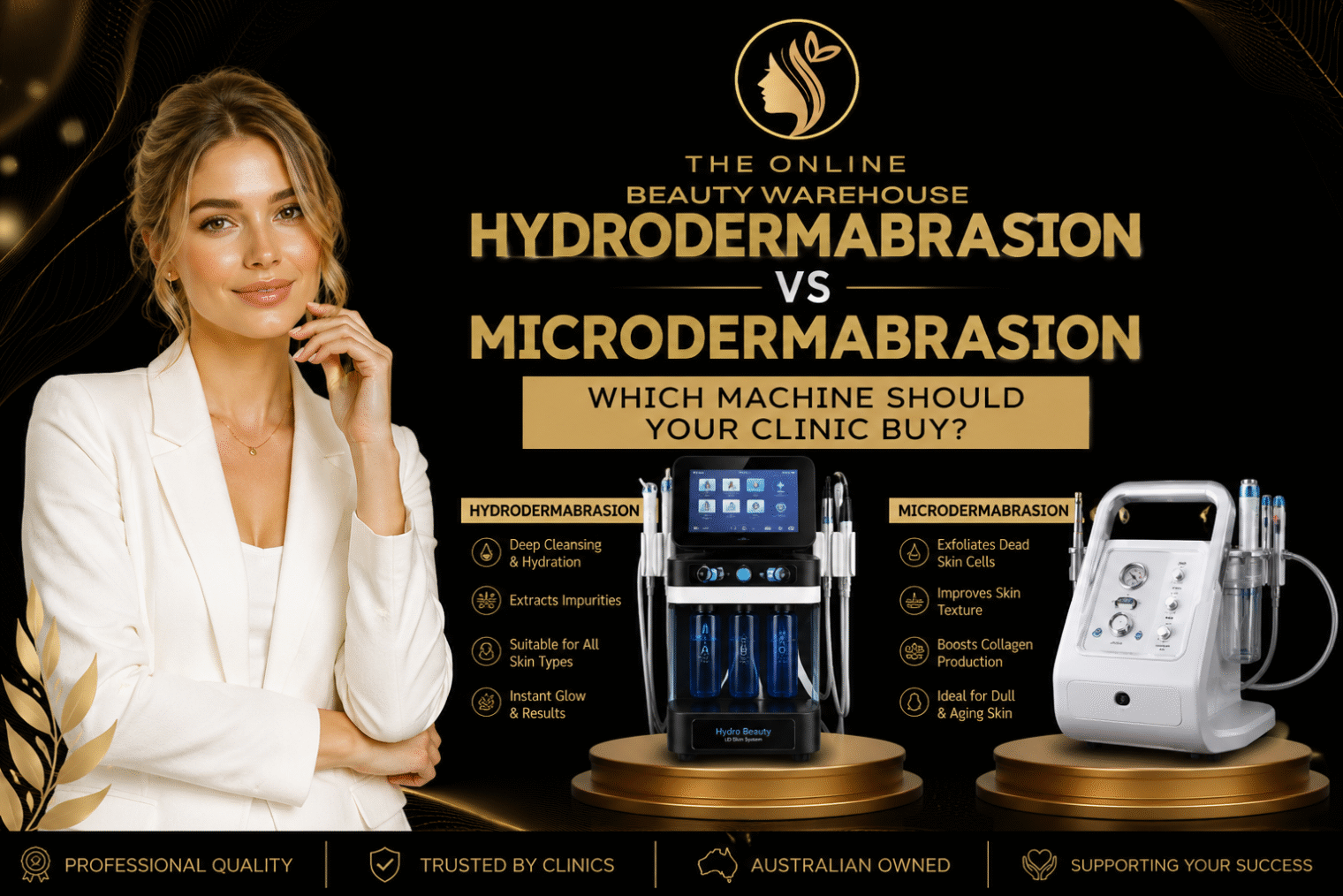
If you have spent any time researching facial treatment machines for your clinic, you have almost certainly landed on this question. Hydrodermabrasion and microdermabrasion are both proven, popular technologies that deliver real skin results and generate reliable repeat bookings. They are also genuinely different in how they work, who they work for, what they cost to run, and what you can charge for them.
The good news is that this is not a close call for most clinic owners once you map each machine against your actual client base, treatment room setup, and pricing strategy. This guide lays out everything you need to compare the two technologies honestly: how they work, what clients experience, what the consumable economics look like, how to price each treatment, and which machine suits which kind of clinic.
How Each Technology Actually Works
HYDRODERMABRASION
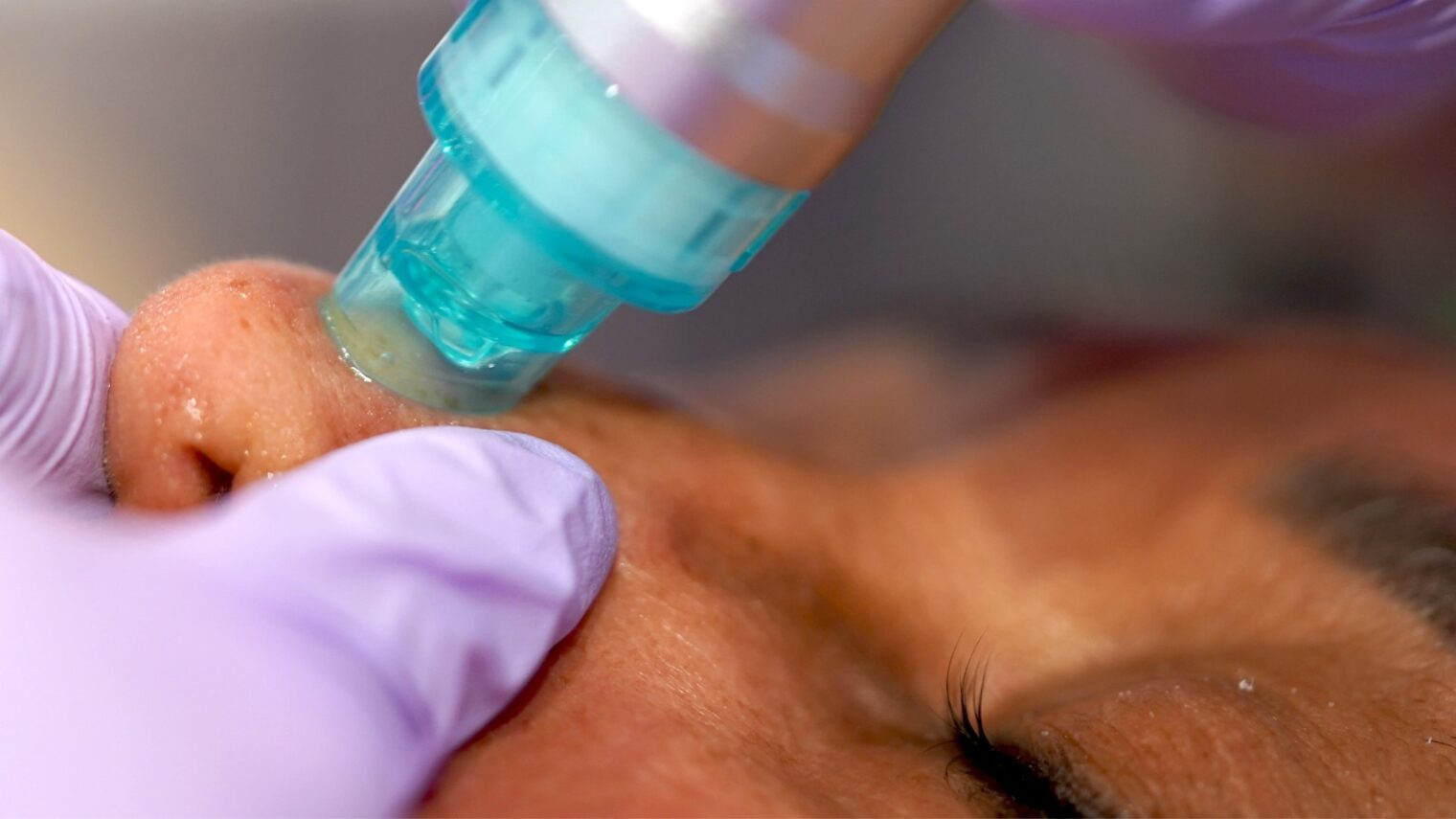
Hydrodermabrasion uses a vortex of water, suction, and in most systems a simultaneously infused serum to exfoliate the skin surface while drawing out impurities from the pore. The handpiece creates a sealed environment against the skin where fluid movement performs the exfoliation rather than physical abrasion. As the dead skin and debris are extracted, a serum is pushed into the follicle at the same moment, which is the distinctive feature that separates hydrodermabrasion from everything that came before it.
The result is a treatment that cleans deeply and hydrates simultaneously. Most clients feel their skin is immediately plumper, smoother, and more balanced after a single session. There is no redness, no crystal residue, no mechanical scraping sensation. It is a comfortable treatment that suits a wide range of skin types, including reactive and sensitive skin.
MICRODERMABRASION
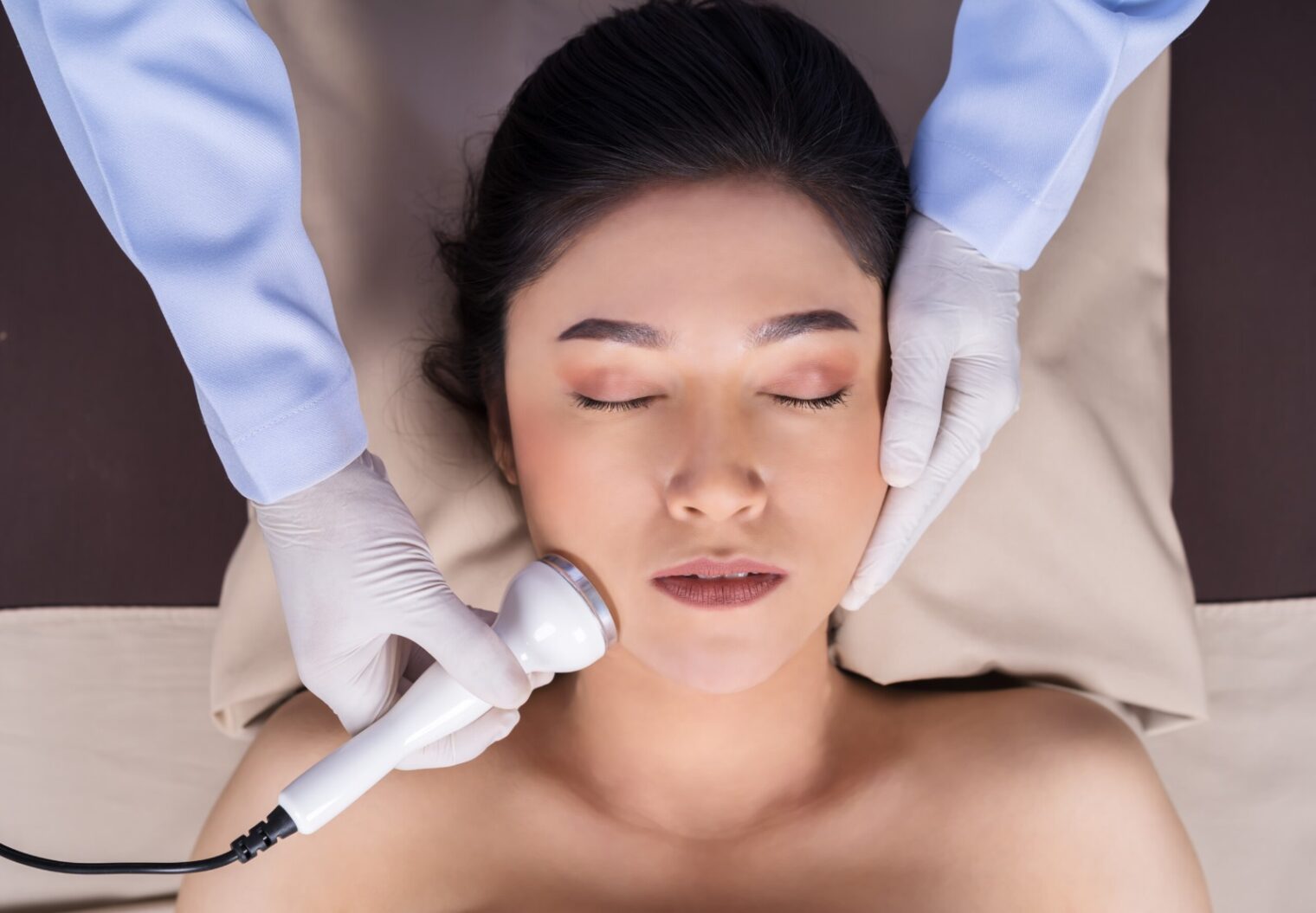
Microdermabrasion works through physical abrasion. The original technology used pressurised crystals (usually aluminium oxide or sodium bicarbonate) propelled across the skin surface while suction simultaneously removed the crystals along with the exfoliated skin cells. Diamond-tip microdermabrasion, which has largely replaced crystal systems in professional salon use, uses a wand tipped with industrial diamond particles that manually abrades the skin as it is moved across the surface, with suction pulling away the dead skin cells.
The outcome is meaningful exfoliation, improved skin texture, and better product absorption. It is a well-established treatment with a long track record and a client base that knows what it is and trusts the results. It does not hydrate in the same way hydrodermabrasion does, but it goes deeper on the exfoliation front for thicker, oilier skin types that can tolerate the abrasion.
Client Outcomes: What Each Treatment Actually Delivers
Hydrodermabrasion outcomes
- Immediate improvement in skin hydration that clients can see and feel
- Visible pore cleansing and reduction in congestion without post-treatment purging
- Improved skin texture and smoothness after a single session
- Calmer, less reactive skin due to the absence of abrasive friction
- Stronger results when used with targeted serums for specific concerns such as pigmentation, ageing, or acne
- Zero downtime: clients can go straight back to work or a social event
Microdermabrasion outcomes
- Deeper mechanical exfoliation that addresses thicker, more congested skin more aggressively
- Visible improvement in skin texture, fine lines, and surface irregularities
- Reduced appearance of superficial acne scarring with consistent treatment series
- Improved product absorption immediately after treatment
- Minimal downtime: some redness for one to two hours is the most common post-treatment response
- Strong results for clients with oily or sebaceous skin that can tolerate physical abrasion
The sensitive skin divide
This is where the choice becomes clearest for many clinics. Hydrodermabrasion is suitable for sensitive, reactive, and compromised skin types. Rosacea-prone clients, post-procedure skin, menopausal skin, and anyone who has had a reaction to more aggressive treatments in the past can typically tolerate hydrodermabrasion well. Microdermabrasion can irritate sensitive skin and is contraindicated for some reactive skin presentations.
If your clinic draws a mixed clientele, hydrodermabrasion serves a broader range of skin types without requiring you to turn away sensitive-skinned clients. If your client base is predominantly younger, oilier-skinned, and seeking deep pore work, microdermabrasion delivers excellent results for that demographic at a lower equipment investment.
In Australian skin clinics, hydrodermabrasion has largely replaced traditional crystal microdermabrasion in facial menus because of its versatility across skin types and its ability to add a hydration and serum infusion step that clients notice immediately.
Side-by-Side Comparison
Use this table as a reference when evaluating both technologies against your clinic’s specific situation.
| Factor | Hydrodermabrasion | Microdermabrasion |
| How it works | Water + serum infusion + suction | Abrasive crystals or diamond tip + suction |
| Skin types suited | All, including sensitive | Normal to oily; caution with sensitive skin |
| Downtime | None | Minimal; possible redness 1 to 2 hours |
| Hydration outcome | High: serums infused during treatment | Low: exfoliation only, no infusion |
| Exfoliation depth | Superficial to moderate | Moderate; deeper with diamond tip |
| Consumables needed | Disposable tips, serums | Crystal powder or diamond tips |
| Consumable cost/tx | $5 to $20 depending on serum chosen | $2 to $8 depending on tip type |
| Training difficulty | Low to medium | Low |
| Machine price range | $800 to $4,500+ | $500 to $2,500 |
| Treatment time | 45 to 75 minutes | 30 to 45 minutes |
| Typical AU pricing | $120 to $250 per session | $80 to $160 per session |
| Retail upsell easy? | Yes: serums, masks, SPF | Yes: SPF, calming serums |
| Best for | All skin types, sensitive, hydration focus | Congested, oily, thicker skin types |
Consumable Costs: What You Spend Per Treatment
Hydrodermabrasion consumables
The ongoing costs for hydrodermabrasion come from two sources: the disposable handpiece tips that should be replaced between clients for hygiene, and the serums used during the treatment. Tip costs vary by machine but are typically low per unit. Serum costs depend on the range you use and the volume required per treatment.
A reasonable estimate for consumables per hydrodermabrasion treatment is $8 to $20, depending on the serum used and whether you stock a premium tier for upsell. At a treatment price of $150 to $200, the margins are strong.
Microdermabrasion consumables
Diamond-tip microdermabrasion has a lower consumable cost per treatment than crystal systems because the tip is reusable with appropriate cleaning between sessions and replacement at longer intervals. The main consumable cost is tip replacement when the diamond surface dulls, plus any sterile filter or reservoir components specific to your machine model.
Consumable cost per microdermabrasion treatment in a diamond-tip setup typically runs $2 to $8, making it one of the lower-cost treatments to run from a supplies perspective. This is a genuine margin advantage if your treatment pricing is competitive.
Cheaper consumables per treatment do not automatically mean better margins. Microdermabrasion typically commands a lower treatment price than hydrodermabrasion, so the net revenue per hour can be similar or even lower despite the lower supply cost.
Treatment Pricing: What Australian Clinics Are Charging
Hydrodermabrasion pricing in Australia
- Express Hydrodermabrasion (30 min): $80 to $120
- Standard Hydrodermabrasion Facial (45 to 60 min): $130 to $200
- Deluxe Hydrodermabrasion with Serum Infusion (60 to 75 min): $160 to $250
- Hydrodermabrasion Package (series of 6): $600 to $1,100
- Hydrodermabrasion with LED add-on (60 to 75 min): $160 to $250
Microdermabrasion pricing in Australia
- Express Microdermabrasion (30 min): $70 to $110
- Standard Microdermabrasion Treatment (45 min): $90 to $150
- Microdermabrasion with Mask (60 min): $110 to $160
- Microdermabrasion Package (series of 6): $480 to $750
- Microdermabrasion with LED or Peel add-on: $130 to $180
These price ranges reflect the broader Australian market. What you can charge in your specific location depends on your city and suburb, your salon positioning, your clientele, and the depth of your service. Inner-city and premium coastal clinics regularly sit at the top end of these ranges. Volume-focused clinics in competitive suburban markets may price closer to the lower end to drive bookings.
Return on Investment: The Numbers That Actually Matter
Return on investment for any beauty machine depends on three variables: what you paid for the machine, what you charge per treatment, and what you spend per treatment on consumables. The table below uses realistic mid-range figures to illustrate the payback timeline for each technology.
| Hydrodermabrasion | Microdermabrasion | |
| Machine investment (mid) | $2,000 | $1,000 |
| Avg treatment price | $180 | $110 |
| Consumable cost per tx | $12 | $5 |
| Net revenue per tx | $168 | $105 |
| Treatments to break even | 12 treatments | 10 treatments |
| Weekly revenue (5 tx/week) | $840 | $525 |
| Monthly revenue (20 tx/mo) | $3,360 | $2,100 |
| Payback period (mid scenario) | Under 2 months | Under 2 months |
These figures use conservative treatment volumes. Most clinics offering hydrodermabrasion as a core facial service book more than five treatments per week once the service is established in their menu and their client base has experienced it. At ten treatments per week, the monthly revenue figures roughly double and payback moves to within four to six weeks for mid-range machine investments.
The cleaner ROI calculation for a new machine is: (machine price divided by net revenue per treatment) equals number of treatments to break even. For a $2,500 hydrodermabrasion machine at $155 net per treatment, that is approximately 17 treatments. At three bookings per week, you break even within six weeks.
Training Difficulty: How Long Before You Are Client-Ready
Hydrodermabrasion training
Hydrodermabrasion is considered a low to medium difficulty machine to learn. The treatment protocol is straightforward: cleanse, tone, apply the handpiece in a systematic pattern across the face, adjust suction level for different zones, rinse, and finish. The machine does most of the work. The learning curve is around understanding suction settings for different skin types, choosing the right serum for the client’s concern, and building consistent handpiece technique to avoid missed coverage or excessive dwell time in one area.
Most therapists are confident treating clients after one to two days of hands-on practice. The more experience you build with serum selection and client consultation, the more sophisticated and effective your service becomes, but the baseline competency for safe, quality treatments is achievable quickly.
Microdermabrasion training
Microdermabrasion has a slightly lower learning curve than hydrodermabrasion in terms of technique variability. The diamond-tip handpiece is moved across the skin in even, overlapping passes with consistent speed and suction. The primary learning focus is on suction level, number of passes for different areas, and contraindication screening.
A motivated therapist with existing facial treatment experience can typically be client-ready with microdermabrasion after a full day of supervised practice. The technology is well-established enough that training resources are widely available and the protocol is consistent across most professional machines.
Training resources at The Online Beauty Warehouse
Room Setup: What Each Machine Needs
Hydrodermabrasion room requirements
- Standard treatment bed with full recline
- Trolley or cart for the machine, products, and consumables
- Power outlet within reach of the treatment bed
- Access to water for the machine’s reservoir in most systems
- Product storage for serums, typically a refrigerated unit for premium ranges
- Standard room size of 10 to 15 square metres works well
Microdermabrasion room requirements
- Standard treatment bed with full recline
- Trolley or cart for the machine and consumables
- Power outlet within reach of the treatment bed
- No water connection required for diamond-tip systems
- Crystal systems require additional ventilation for fine particle management
- Standard room size of 10 to 15 square metres works well
Neither machine has unusual space requirements. Both fit comfortably into a standard single-treatment room and can share the space with other equipment. Hydrodermabrasion may require a small water source for the reservoir depending on the model, but this is typically managed with a standard sink in or adjacent to the treatment room.
Which Machine Is Right for Your Clinic?
Use this table to match your clinic’s specific situation to the better option.
| Your situation | Better choice | Why |
| Clients with sensitive or reactive skin | Hydrodermabrasion | No abrasives; serum infusion calms while it exfoliates |
| Budget under $1,500 to start | Microdermabrasion | Lower entry point; solid clinical results for the price |
| Want to charge premium facial pricing | Hydrodermabrasion | Higher perceived value; hydration results justify $150 to $250 |
| Mature and dry skin client base | Hydrodermabrasion | Hydration is the primary concern for this demographic |
| Oily, congested, thicker skin dominant client base | Either or both | Microdermabrasion excels at deep pore cleansing |
| Want the strongest retail conversion | Hydrodermabrasion | Serum choice drives natural retail conversation |
| Busiest slot is 30 to 45 minute appointments | Microdermabrasion | Faster treatment time fits tighter booking schedules |
| Starting a new facial menu from scratch | Hydrodermabrasion | More versatile across skin types; longer-term market demand |
| Already have hydrodermabrasion, want to add something | Microdermabrasion | Complements existing menu for oilier skin types |
Many successful clinics stock both. Hydrodermabrasion handles the majority of facial treatment bookings and sensitive skin clients, while microdermabrasion is offered for clients who specifically want deeper exfoliation or who have thicker, oilier skin that responds better to abrasive techniques. Having both also lets you upsell combination treatments.
Frequently Asked Questions
What is the main difference between hydrodermabrasion and microdermabrasion?
Hydrodermabrasion exfoliates using water, suction, and serum infusion simultaneously, making it a cleanse-and-hydrate treatment in one. Microdermabrasion uses physical abrasion from diamond particles or crystals plus suction to exfoliate the skin surface. The key practical differences are that hydrodermabrasion suits a wider range of skin types including sensitive skin, delivers immediate hydration, and typically commands higher pricing. Microdermabrasion goes deeper on exfoliation for thicker skin types and has lower consumable costs per treatment.
Can I use hydrodermabrasion on sensitive skin?
Yes. Hydrodermabrasion is one of the most suitable professional facial treatments for sensitive, reactive, and compromised skin types because it does not use abrasive particles or friction. The water and serum vortex exfoliates without irritating the skin barrier, and the infusion step can include calming or barrier-supporting serums that leave reactive skin better balanced than before the treatment. It is among the safest choices for menopausal skin, post-procedure skin, and skin presenting with mild rosacea.
Which machine has lower running costs?
Microdermabrasion typically has lower consumable costs per treatment, usually $2 to $8 for diamond-tip systems compared to $8 to $20 for hydrodermabrasion when serums are included. However, hydrodermabrasion commands significantly higher treatment prices in the Australian market, meaning the net revenue per treatment is often higher despite the higher consumable cost. The better question is not which has lower costs, but which generates better net revenue per chair hour for your specific clinic.
How long does it take to learn to use a hydrodermabrasion machine?
Most beauty therapists with existing facial treatment experience are client-ready with hydrodermabrasion after one to two days of supervised hands-on practice. The technique itself is straightforward; the learning curve is in understanding suction settings for different skin types, serum selection for specific concerns, and building a consistent treatment flow. Microdermabrasion has a slightly lower initial learning curve, with most therapists confident after a full day of supervised practice.
What should I charge for hydrodermabrasion in Australia?
Standard hydrodermabrasion facials in Australian clinics are typically priced between $130 and $200 for a 45 to 60 minute treatment. Premium services including extended serums, LED add-ons, or a luxury experience run $160 to $250. Package pricing for a series of six treatments generally sits between $600 and $1,100. Location matters significantly: inner-city and premium coastal clinics regularly charge at the top end of these ranges.
Is it worth buying both machines or should I choose one?
It depends on your client volume and room capacity. If you are starting out or have one treatment room, start with the machine that suits the majority of your client base and add the other later. If you have the space and budget, having both is a legitimate strategy: hydrodermabrasion handles your broadest client demographic and commands premium pricing, while microdermabrasion complements it for clients specifically seeking deeper exfoliation or congestion treatment. Combination services are also possible with both machines in your menu.
Do I need a water supply in my treatment room for hydrodermabrasion?
Most hydrodermabrasion machines use a self-contained water reservoir that you fill before each treatment or at the start of the day. A plumbed water connection directly to the machine is not required in most systems, though having a sink accessible in or near the treatment room makes filling and cleaning easier. Check the specific requirements of the machine you are considering before finalising your room setup.
What consumables do I need to stock for hydrodermabrasion?
The main consumables for hydrodermabrasion are disposable handpiece tips (replaced between clients) and the serums used during the infusion phase. The Online Beauty Warehouse stocks both in their hydrodermabrasion consumables range with local Queensland stock and free shipping. Serum choice varies by machine brand, so confirm compatibility before ordering.
What other machines pair well with hydrodermabrasion or microdermabrasion?
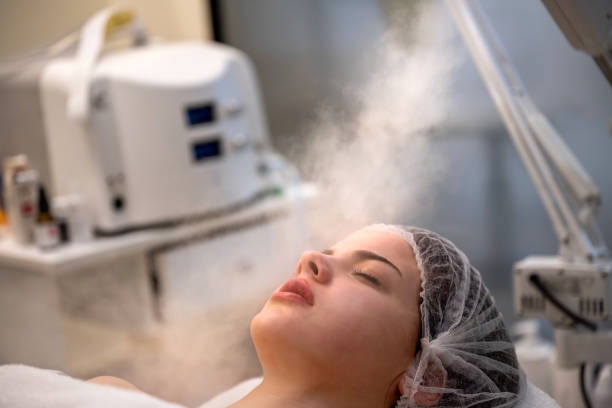
LED therapy is the most common and highest-return add-on to both treatments. Adding an LED step to any facial treatment takes 15 to 20 minutes, adds $30 to $60 to the treatment price, and significantly improves client results for skin rejuvenation, acne, and post-procedure recovery. Facial steamers are useful for skin preparation before both treatments. High frequency and galvanic treatments also complement both technologies as add-on steps. Browse all facial machines at The Online Beauty Warehouse.
Ready to Compare Specific Models?
The Online Beauty Warehouse stocks hydrodermabrasion and microdermabrasion machines at every price point, from solid entry-level units for new clinics to multi-function platforms for established facial treatment menus. Consumables for both are held in Queensland stock and ship free Australia-wide.
Shop Hydrodermabrasion Machines | Shop Consumables | All Machines | Contact Us
The Online Beauty Warehouse | theonlinebeautywarehouse.com.au | 07 5623 3319 | Free Shipping Australia-Wide | Price Beat Guarantee | Queensland Stock