At some point, every salon owner ends up staring at a quote for a machine they know will change their treatment menu, and wondering how on earth to pay for it. New equipment is exciting. The invoice is not. Whether it is your first hydrodermabrasion machine or your fifth HIFU unit, the same question comes up: do you buy it outright, or do you lease salon equipment and keep your cash for everything else the business needs?
There is no single right answer here, and anyone who tells you otherwise is probably trying to sell you something. What there is, though, is a set of trade-offs that show up in pretty much every salon, no matter what treatments you offer. Once you understand those trade-offs, the decision gets a lot less stressful.
Why This Decision Matters More Than a Line on a Spreadsheet
Salon equipment is not like buying a new kettle for the staff room. A single machine, whether it is a laser, an IPL device, or a Japanese head spa unit, can cost anywhere from a few thousand dollars to well into six figures. Get the payment structure wrong and you can end up cash poor in your busiest months, or locked into a lease on a machine that is already outdated by the time you have paid it off.
Get it right, and equipment finance becomes a tool that helps you grow faster than your bank balance alone would allow. That is really the whole point of this comparison. It is not about which option is cheaper on paper. It is about which option fits the stage your business is at right now.
Buying Outright: What You Are Really Signing Up For
Buying equipment outright, whether with cash reserves or a business loan, means the machine is yours from day one. No monthly repayments to a finance company, no restrictions on how you use it, and no one to answer to if you want to move it between rooms, sell it privately in three years, or run it into the ground.
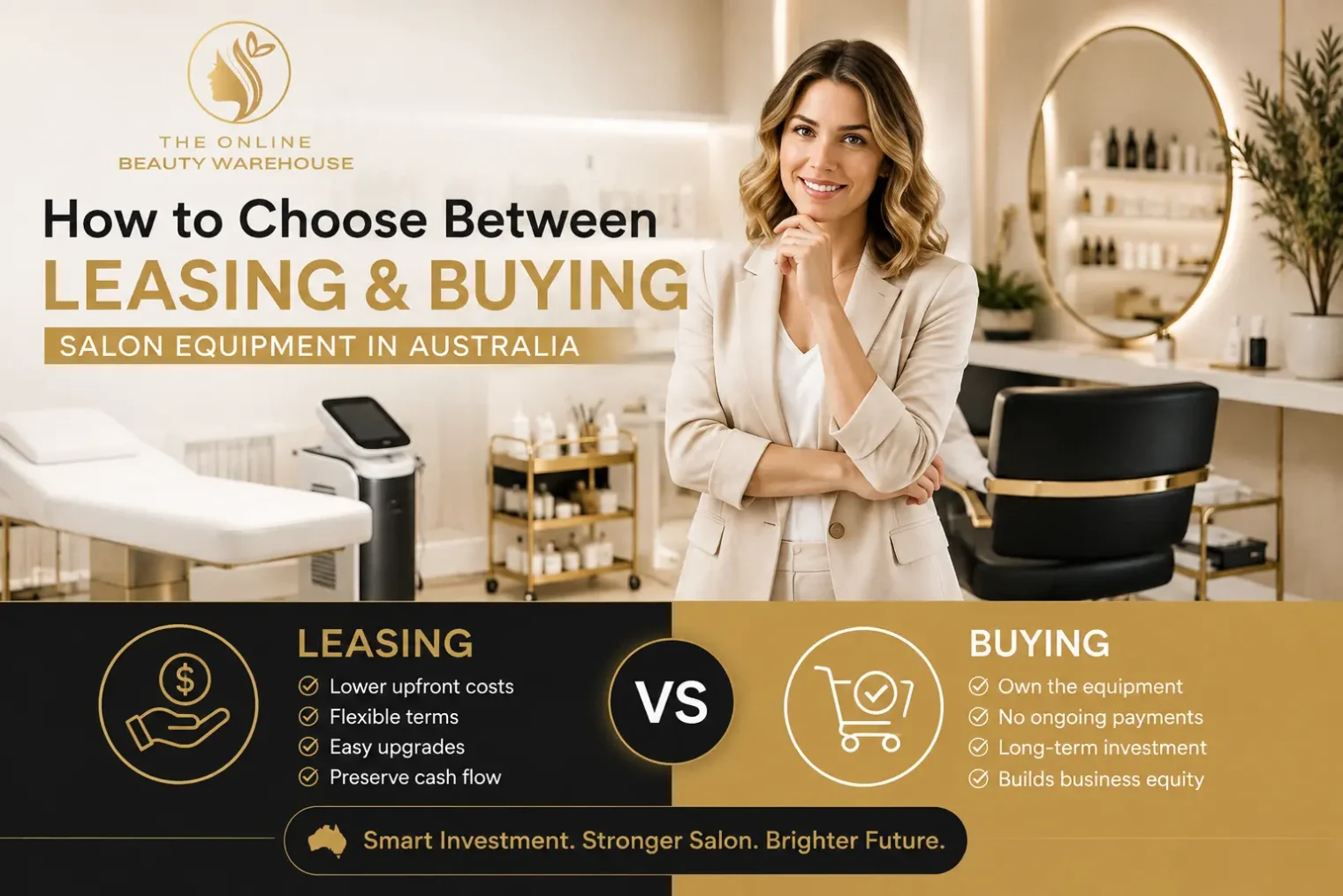
The upside of buying is straightforward:
- You own the asset outright and it sits on your balance sheet.
- There is no ongoing repayment once it is paid for, which helps profitability in later years.
- You can claim depreciation over the life of the equipment.
- There are no usage restrictions, contract exit fees, or lease-end conditions to worry about.
The downside is just as real:
- A large chunk of cash leaves the business in one hit, which can strain working capital.
- You carry the full risk if the technology becomes outdated sooner than expected.
- Resale value on beauty machines can drop quickly, especially for high-tech devices.
- If you finance the purchase with a standard business loan, you still have monthly repayments, just structured differently to a lease.
Leasing Salon Equipment: How It Actually Works
Leasing (sometimes called equipment rental or a finance lease, depending on the structure) means a finance provider owns the machine and you pay a fixed amount, usually monthly, to use it. At the end of the term, you might have the option to upgrade, extend the agreement, or in some cases buy the equipment outright for a residual amount.
For a lot of Australian salon owners, particularly those opening their first clinic or adding a new treatment category, leasing is what makes it possible to get started at all. Instead of needing tens of thousands of dollars up front, you spread the cost over the same period the machine is actually earning you money through client bookings.
The upside of leasing:
- Little to no upfront capital outlay, which protects your cash flow.
- Repayments can often be treated as a business expense rather than a capital purchase.
- Easier to upgrade to newer technology at the end of the term.
- Predictable monthly costs that make budgeting simpler, especially for newer salons.
The trade-offs:
- Over the full term, leasing usually costs more than paying cash upfront.
- You do not own the equipment unless the agreement includes a buyout option.
- Contracts can include usage conditions, minimum terms, or exit fees.
- Approval depends on your credit history and the finance provider’s criteria.
Cash Flow: The Question That Decides Most of These Choices
In practice, cash flow is usually what tips the decision, more than any other factor. A salon with strong reserves and steady revenue can absorb a large upfront purchase without blinking. A salon that is a year or two old, still building its client base, or juggling rent, wages, and stock orders, often cannot.
The question worth asking is not “can I afford this machine?” but “what else does this cash need to do in the next six months?” If buying outright means you cannot cover a quiet month, or you would need to dip into funds set aside for staff or stock, leasing is usually the safer move, even if it costs more over time. Cheaper on paper is not the same as better for your business.
Tax Treatment: A General Overview
Both leasing and buying can offer tax benefits, but the details depend on the structure of the agreement, your business entity, and current Australian tax rules, so this is genuinely a case where a conversation with your accountant or tax adviser matters more than anything you read in a blog post. As a general guide only:
- Equipment you buy outright can typically be depreciated over its effective life, and instant asset write-off provisions have applied to eligible purchases in some years, though thresholds and eligibility change, so check current settings.
- Lease payments are often treated as a deductible business expense, spread across the term of the agreement, rather than claimed as depreciation.
- The GST treatment differs between a finance lease, an operating lease, and a chattel mortgage, which can affect your cash flow at tax time.
None of this is financial or tax advice, and the right structure really does depend on your specific circumstances. It is worth having this conversation with your accountant before you sign anything, and our team is also happy to talk through the general options available on equipment you are considering.
Flexibility and the Upgrade Problem
Beauty and aesthetics technology moves fast. A machine that is the standout option this year might be a step behind in three or four years, particularly in fast-moving categories like IPL, HIFU, and skin analysis devices. If you buy outright, upgrading means finding a buyer for the old machine, which is not always simple, and then funding the new purchase from scratch.
Leasing tends to build upgrade flexibility into the structure from the start. Many agreements let you roll into a new lease on newer equipment once your current term ends, which suits salons that want to stay current without repeating the whole buying process every time. If you expect a treatment category to change quickly, or you are still working out which machines actually get booked, that flexibility can be worth more than the extra cost of leasing over time.
A Simple Framework Based on Your Business Stage
Rather than trying to find one universal answer, it helps to think about where your salon sits right now.
Just starting out or opening your first salon
Cash reserves are usually tight and every dollar is doing several jobs at once, fit-out, stock, marketing, wages. Leasing lets you get core equipment in the door without draining your opening capital, and it keeps your options open while you learn what your clients actually want to book. This is also a good stage to look at a starter package rather than buying machines one at a time. Our Start a Beauty Business hub is built for exactly this stage, with bundled equipment, training, and supplies for specific treatment categories.
One to three years in, growing steadily
By this point you usually know which treatments are consistently booked out and which were a slower burn. This is often the stage where a mix makes sense: buy the equipment that is core to your everyday revenue and proven to hold its value, and lease anything newer or more experimental while you test demand. It is also worth reviewing whether any existing lease terms are due to end soon, since that is a natural point to reassess.
Established, multi-room salon or clinic
Established businesses generally have stronger cash flow and more negotiating power with finance providers, which opens up better lease rates and terms. At this stage, the decision often comes down to strategy rather than necessity: buying suits equipment you plan to run for its full working life, while leasing still makes sense for categories where staying on the latest technology is part of your point of difference in the market.
Questions Worth Asking Before You Sign Anything
- How long do I realistically expect to use this specific machine before I want to upgrade it?
- What would buying outright do to my cash reserves over the next two quarters?
- Does the lease agreement include an upgrade path, and what are the exit conditions if my plans change?
- Have I compared the total cost of leasing over the full term against the upfront purchase price plus finance costs?
- Have I spoken to my accountant about which structure suits my business entity and current tax position?
Getting the Right Advice for Your Situation
There is genuinely no shortcut to working out which option suits your salon best, because it depends on your cash position, your growth plans, and the specific machines you are looking at. What we can do is talk you through the general finance and leasing options available on any equipment in our range, and help you compare them against buying outright before you commit. You can book a consultation with our team to talk through your options, whichever stage your salon is at.
If you are just getting started, take a look at our Start a Beauty Business starter packages, or browse the full range of machines and devices if you already know what you are after. Established salons expanding into a new treatment category may also want to explore our training and starter kits or our customised training packages to get the team up to speed on new equipment. Salons buying in volume across multiple locations can also reach out through our wholesale enquiry page for tailored pricing.
Whichever way you go, do not forget the ongoing side of ownership. Machines need proper sterilisation and hygiene supplies and regular consumables to stay compliant and keep running well, so factor those running costs into your budget alongside the lease or purchase price itself.
Frequently Asked Questions
Is it cheaper to lease or buy salon equipment in Australia?
Buying outright is usually cheaper over the full life of the machine, since you avoid finance charges built into a lease. Leasing costs more over time but requires far less cash upfront, which is often the deciding factor for newer salons.
Can I claim salon equipment leasing as a tax deduction?
Lease payments are often deductible as a business expense, but this depends on the type of lease and your business structure. Speak with your accountant about your specific situation before assuming a particular tax treatment applies.
What credit score or trading history do I need to lease beauty equipment?
Requirements vary between finance providers, but most look at your business trading history, credit history, and sometimes a personal guarantee for newer businesses. Salons less than a year or two old may need to provide additional documentation or a deposit.
Should a new salon buy or lease its first machine?
Most new salons are better off leasing their first major machine, since it preserves cash for fit-out, stock, and marketing during the period when revenue is still building. A bundled starter package can also make more financial sense than buying a single machine outright.
Can I upgrade leased salon equipment before the contract ends?
Some agreements allow an early upgrade, though this usually involves a fee or rolling the remaining balance into a new contract. It is worth checking this clause before signing, especially for equipment in fast-moving categories like IPL or skin analysis.
What happens at the end of a salon equipment lease?
Depending on the agreement, you may be able to return the equipment, extend the lease, upgrade to a newer model, or purchase the machine outright for an agreed residual value. Always confirm end-of-term conditions before you sign.
Choosing between leasing and buying is not a one-off decision you make and forget. Most salons end up using both approaches at different points as the business grows. What matters is going in with a clear view of your cash flow, your growth plans, and the true cost of each option, rather than picking whichever one feels easiest in the moment.