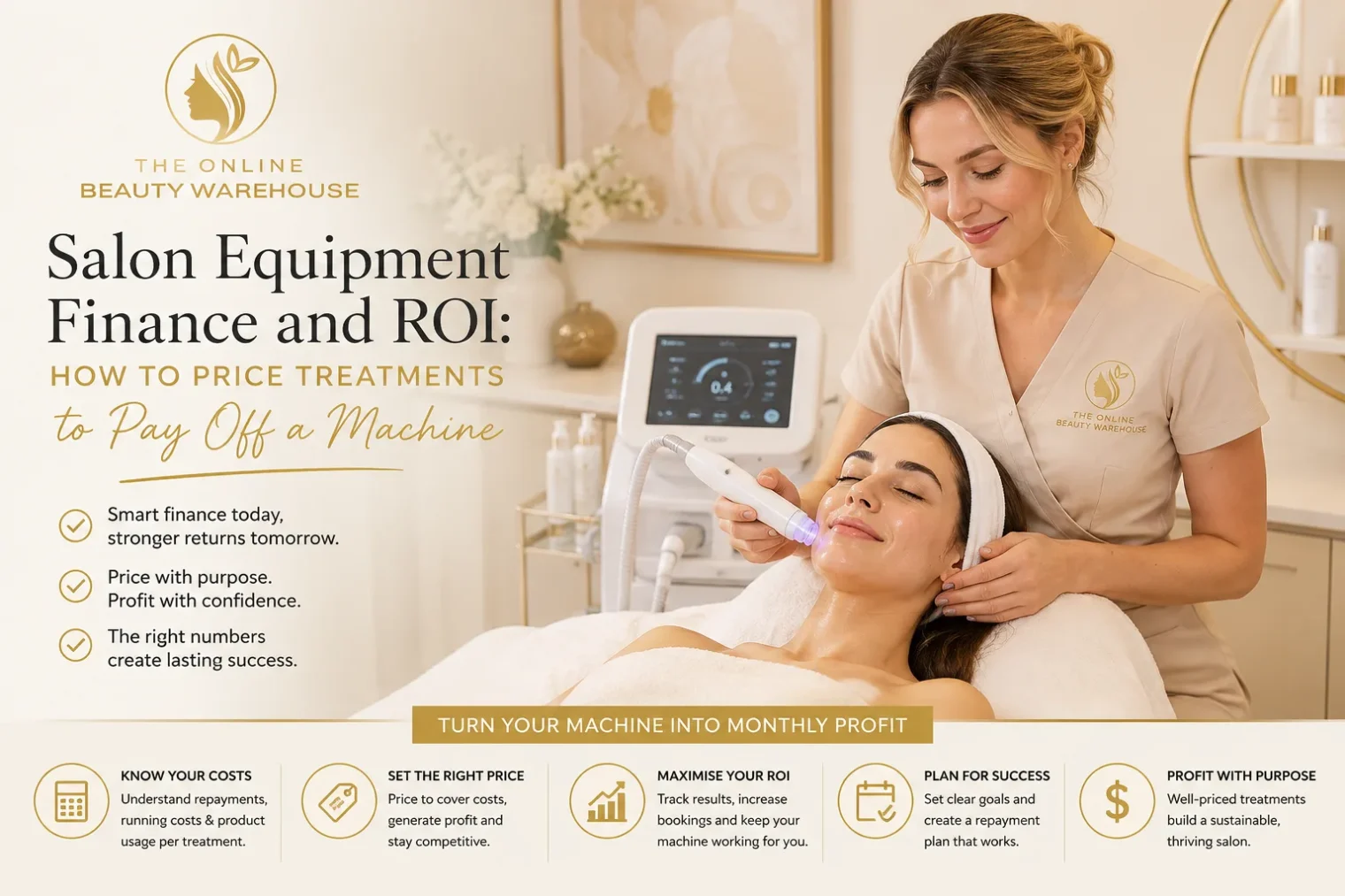
Grabbing a new beauty machine is one of the larger investment calls a salon owner makes, you know. If it’s done well, one actual bit of equipment can shift your treatment menu, pull in a fresh client demographic and, somehow add tens of thousands of dollars to your yearly revenue. But when it’s done with no real forethought, the same machine can end up kind of sitting there, under used, in the corner of your treatment room while the repayments quietly nibble away at your margins.
The difference between those two outcomes usually comes down to one thing: understanding the numbers before you buy. How many treatments do you need to perform each week to cover the cost? What should you charge to hit a healthy margin? When will the machine move from a liability into a genuine profit centre?
This guide walks you through all of it. We cover how salon equipment finance works in Australia, how to calculate return on investment for beauty machines, practical treatment pricing strategies, and the most common mistakes that clinic owners make when they skip the financial planning step. There are real examples and real numbers throughout, so you can apply this directly to whatever machine you are considering.
How Salon Equipment Finance Works in Australia
Most beauty machine purchases do not have to be funded entirely from your own pocket. Equipment finance is widely available for Australian salons and clinics, and for many business owners it is the smarter option even when the cash is available to buy outright.
The Main Finance Options
Chattel mortgage: From day one you’re already owning the equipment, but the lender still has a security interest sitting over the asset, kind of like a “hold on this” thing. It’s probably one of the more common setups for buying salon equipment and it often lets you claim the full GST input tax credit in the same period, where you actually make the purchase
Equipment lease: You’re paying to use the equipment for a set term, agreed upfront, but you do not own it. The lease payments are usually fully tax-deductible as a business expense. Then at the end of the term, there might be an option to buy the asset for a residual value , depending on how the lease was worded
Business loan: This one is more adaptable, because the money is used to buy the equipment outright. Interest rates and the loan terms can swing a lot, it really depends on the lender and their criteriaBuy now, pay later (BNPL) for business: Increasingly available for B2B purchases. Useful for lower-value equipment where a full finance application is not warranted.
Why Finance Can Be the Smarter Choice Even When You Have the Cash
Keeping working capital intact is one of those principles in small business finance that people kinda overlook. Say you put $8,000 cash into a machine—well then that money is stuck in a depreciating thing. But if you go the route of financing it at $400 per month, you keep your cash on hand for consumables, marketing, staff costs, or those surprise expenses that always seem to pop up.
And the machine, it earns from day one. If it brings in about $2,000 per month in treatment revenue, then it’s basically covering the repayment way more than four times over by the first month. So your cash stays liquid, and your business stays adaptable, not pinned down.
Plus, financing usually means you can get better equipment sooner. Instead of waiting until you have saved enough to buy outright, you can bring in a professional-grade machine now. Then you let it, in a sense, pay for itself through the treatment revenue it produces. Explore the full range of professional Machines and Devices at The Online Beauty Warehouse to see what is available at different price points.
What to Check Before Applying for Equipment Finance
Your business structure ( sole trader, company , partnership ) pretty much decides what finance options you can actually access. Most lenders will want at least 12 months of trading history for standard equipment finance, and sometimes they are not flexible on this. You’ll also usually need ABN registration and GST registration, it kind of goes hand in hand, depending on how you’re set up. If the business is newer you may still get over the line using personal guarantees or asset security type arrangements. When you’re checking deals don’t just stare at the headline interest rate, compare the comparison rate instead, otherwise it can look better than it really is. Also confirm if the finance is tax-deductible, and talk with your accountant about the most suitable setup because the “best” structure for deductions isn’t always obvious.
How to Calculate Beauty Machine ROI
ROI stands for return on investment, and it is the most important number to work out before committing to any significant equipment purchase. The calculation is straightforward, but most salon owners skip it entirely and then wonder why a machine that looked like a great investment on paper is not contributing what they expected.
The Basic ROI Formula
| ROI Formula
ROI (%) = ((Total Revenue Generated – Total Cost of Investment) / Total Cost of Investment) x 100
Example: A machine costs $6,000. In 12 months it generates $18,000 in treatment revenue with $3,000 in consumables and operating costs. Net return = $18,000 – $6,000 – $3,000 = $9,000 ROI = ($9,000 / $6,000) x 100 = 150% in the first year |
A 150% ROI in year one is achievable and realistic for machines that are well-priced, well-marketed, and consistently booked. The variables that determine where your machine lands on that spectrum are treatment price, weekly booking volume, consumable cost per treatment, and staff time allocated.
The Four Variables That Drive Your Machine’s ROI
| Variable | What It Means | How to Optimise It |
| Treatment price | What you charge clients per session | Research your local market, price to your clinic level |
| Weekly bookings | How many sessions per week the machine runs | Marketing, add-ons, package deals |
| Consumable cost | Cost of tips, serums, single-use items per treatment | Bulk purchasing, supplier pricing |
| Staff time cost | How long each treatment takes x therapist hourly cost | Protocol efficiency, therapist training |
That link between these four variables kind of decides your net revenue per treatment, the real number that actually matters, you know. Like, if one treatment brings in $180 in revenue but then it costs $40 for consumables and another $30 for staff time, what you really get as net contribution is $110 per session. Not $180, because the costs get in there, and yes you have to account for them, even if it feels a bit tedious.
Net Revenue Per Treatment: The Calculation You Actually Need
| Net Revenue Per Treatment
Net Revenue = Treatment Price – Consumable Cost – Staff Time Cost – Allocated Overhead
Example: Hydrodermabrasion facial Treatment price: $180 Consumable cost: -$18 Staff time (60 min): -$25 Allocated room overhead: -$12 Net revenue per session: $125 |
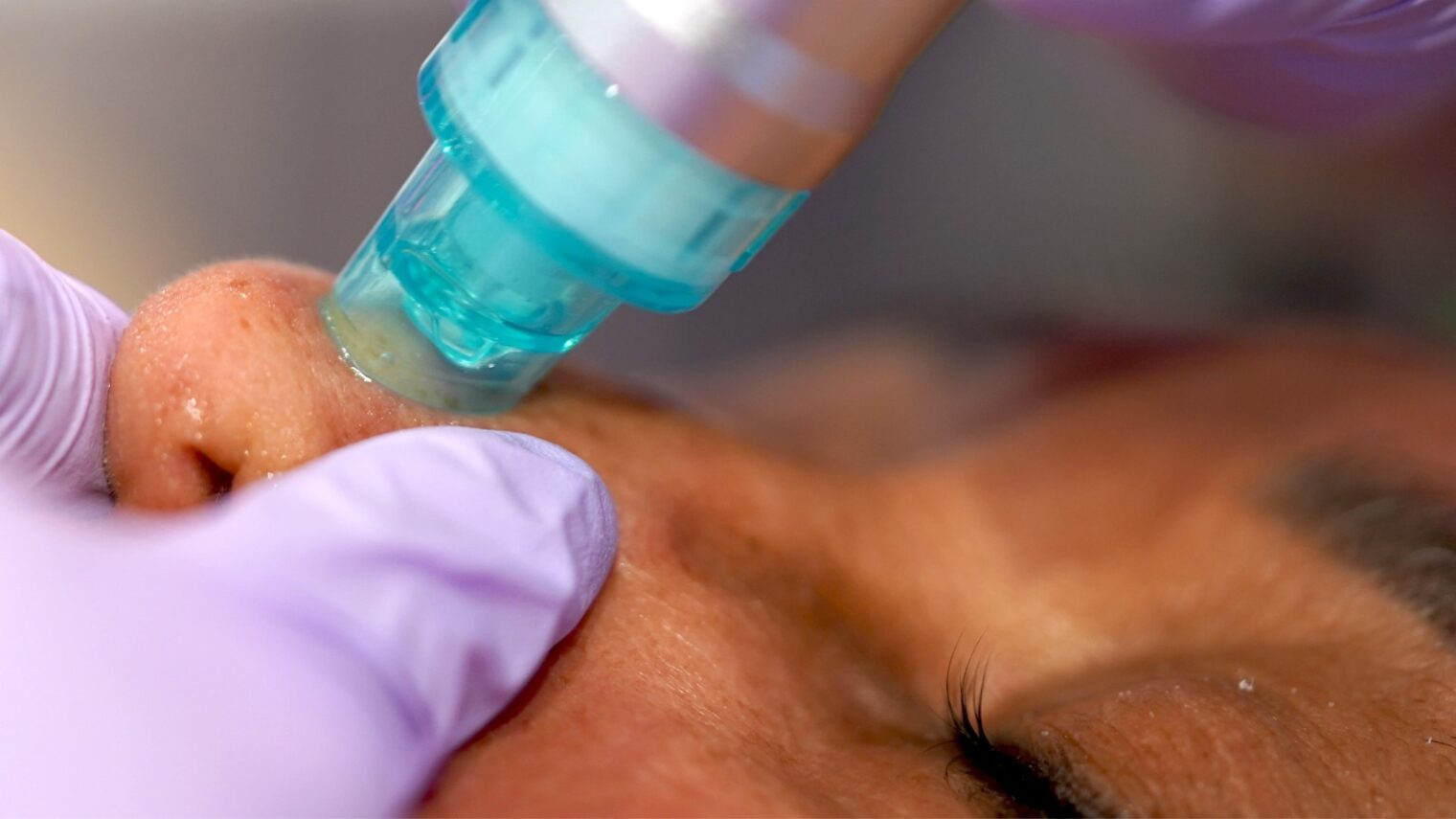
Knowing your net revenue per treatment is what really lets you do the break-even math properly, set pricing that stays solid commercially, and compare machines against each other on an essentially like-for-like basis. For guidance on consumable costs for specific machine types, browse the relevant consumables categories at The Online Beauty Warehouse, including Hydrodermabrasion and Microdermabrasion Consumables and other machine-specific consumable ranges.
Treatment Pricing Calculator: Real Examples by Machine Type
The following examples kind of show how to work through the pricing and break even maths for three common beauty machines at different price points. Just use these as a template, for your own machine assessment, and you know… adapt the rest.
Example 1: Microdermabrasion Machine ($1,200 outright or $65/month financed)
| Factor | Detail |
| Machine cost | $1,200 (or $65/month over 24 months |
| Consumable cost per treatment | $4 (diamond tip wear, filters) |
| Staff time per treatment | $20 (45-min session at $27/hr) |
| Recommended treatment price | $100 to $130 |
| Net revenue per treatment (at $110) | $86 |
| Treatments to break even (outright) | 14 treatments (approx. 4 weeks at 3-4 per week) |
| Treatments to cover monthly finance | 1 treatment covers the repayment |
| Annual revenue at 6 treatments/week | $34,320 gross / $26,832 net |
Example 2: Hydrodermabrasion Machine ($5,500 outright or $250/month financed)
| Factor | Detail |
| Machine cost | $5,500 (or $250/month over 24 months) |
| Consumable cost per treatment | $18 (tips, serums, single-use items) |
| Staff time per treatment | $28 (60-min session at $27/hr) |
| Recommended treatment price | $160 to $220 |
| Net revenue per treatment (at $180) | $134 |
| Treatments to break even (outright) | 41 treatments (approx. 7 weeks at 6 per week) |
| Treatments to cover monthly finance | 2 treatments covers the repayment |
| Annual revenue at 8 treatments/week | $74,880 gross / $55,744 net |
Example 3: HIFU Machine ($12,000 outright or $550/month financed)
| Factor | Detail |
| Machine cost | $12,000 (or $550/month over 24 months) |
| Consumable cost per treatment | $35 (cartridges, gel, single-use items) |
| Staff time per treatment | $40 (90-min session at $27/hr) |
| Recommended treatment price | $350 to $600 |
| Net revenue per treatment (at $450) | $375 |
| Treatments to break even (outright) | 32 treatments (approx. 8 weeks at 4 per week) |
| Treatments to cover monthly finance | 2 treatments covers the repayment |
| Annual revenue at 5 treatments/week | $117,000 gross / $97,500 net |
These examples illustrate an important principle: higher-priced machines do not necessarily take longer to pay off. A HIFU machine at $12,000 breaks even faster in real-world terms than many salon owners expect, because the net revenue per treatment is substantially higher than lower-priced modalities. Browse the HIFU machines and Hydrodermabrasion machines available at The Online Beauty Warehouse to compare options.
Break-Even Analysis: Setting Weekly Booking Targets
Your break-even point is basically the number of treatments you gotta do before the machine starts paying for itself. After you pass that point, each session becomes, you know, a real profit generator and not just “covering costs.” The whole idea is to hit break-even as fast as possible, so you need a strong weekly booking target from day one. Like, clear and measurable, even if it feels a bit rigid at first.
How to Calculate Your Weekly Break-Even Target
| Weekly Break-Even Formula
Weekly break-even sessions = Total machine cost / (Net revenue per treatment x 52 weeks) Or expressed as weekly target: Sessions per week needed = Monthly finance repayment / Net revenue per treatment / 4 weeks Example: $250/month repayment, $134 net revenue per treatment Sessions per week = $250 / $134 / 4 = 0.47 sessions per week Meaning: Just 2 sessions per month covers the entire finance repayment. |
Revenue Projection Table: Hydrodermabrasion at $180 Per Treatment
| Sessions per Week | Monthly Revenue (Gross) | Monthly Net Revenue | Annual Net Revenue | Break-Even Status |
| 2 sessions | $1,440 | $1,072 | $12,864 | Finance covered month 1 |
| 4 sessions | $2,880 | $2,144 | $25,728 | Strong positive return |
| 6 sessions | $4,320 | $3,216 | $38,592 | Excellent ROI |
| 8 sessions | $5,760 | $4,288 | $51,456 | High-performing room |
| 10 sessions | $7,200 | $5,360 | $64,320 | Full-time revenue stream |
The table above kind of shows that even with a conservative two sessions per week, a hydrodermabrasion treatment more than takes care of a financed machine’s monthly repayments. The growth possibility comes from ramping up that booking frequency by using marketing, better packaging and a little bit of word of mouth, as your client base slowly builds up and yes it tends to snowball, in a way.
Increasing ROI Through Upselling: The Strategies That Work
The treatments themselves are only part of the revenue story, the whole picture is a bit longer and sometimes messy. The most profitable clinics in Australia are not just running more sessions, they’re sort of making more revenue per client per visit, like the numbers get stacked. Here’s how you can plan upsell opportunities right into your machine-based services from the start, and not wait until the end, because that rarely works.
Aftercare Product Retail
Every treatment kind of brings along a natural opening to mention home maintenance products, you know, in the moment. A client who just got a hydrodermabrasion facial is usually in that ideal headspace to buy a serum or an SPF, so their results keep going and feel extended longer. If you do a retail sale around $60–$120 on top of a $180 appointment, the revenue per visit can jump roughly 33 to 66 percent.
Stocking the right aftercare products is the starting point. The Online Beauty Warehouse carries a range of Salon Supplies and professional-grade retail products that complement your machine treatments and give clients something to take home.
Treatment Packages and Course Sales
When you sell a course of six or maybe eight treatments upfront, it kind of does two really important things for your business: it locks in revenue ahead of time , and it significantly improves client results, because the cumulative effect of several sessions is almost always better than just one single treatment.
For example a hydrodermabrasion course, with six treatments priced at $900 (that’s like a 15 to 17 percent saving versus the single treatment price), amounts to $900 in committed revenue from one conversion. Now compare that to the effort of converting that same client six separate times at the door.
Membership and Subscription Programs
Monthly membership programs are kinda one of the most powerful revenue stabilizing tools out there for clinic owners. A member pays $150 per month in exchange for one treatment every month , plus a retail discount or something similar, and you end up with a steady recurring income that stays pretty consistent, even when seasonal bookings get weird.
So, with 20 members paying $150 per month, you’ve got $3,000 in guaranteed monthly revenue before you even touch a single walk-in client. And if you layer that on top of your regular bookings , a well-run membership set up can really help de-risk your monthly P&L , you know, in a practical way.
Machine-Compatible Add-On Services
Most beauty machines work best as part of a layered treatment rather than a standalone service. LED therapy added to a hydrodermabrasion facial takes 15 minutes and can add $40 to $60 to the treatment price. A microcurrent add-on following a skin treatment is similarly easy to deliver and adds genuine value for the client.
Browse the LED Machines and EMS and Microcurrent categories to find add-on modalities that pair well with your primary machine investment.
| Revenue Per Client: What Upselling Actually Adds Up To
Base treatment (hydrodermabrasion): $180 LED add-on: +$50 Retail aftercare product: +$80 Total per visit with upsell: $310
At 6 sessions per week with upsell: $1,860/week vs $1,080 without Annual difference: $40,560 in additional revenue from the same number of client visits |
Common Pricing Mistakes That Quietly Damage Profitability
Even experienced clinic owners get caught out by these. If any of these sound familiar, they are worth addressing before you invest in new equipment.
Underpricing to Fill the Appointment Book
Charging below market rate to attract clients is a short-term tactic that creates a long-term problem. Clients who come to you because you are the cheapest option are the least loyal and the hardest to retain when you eventually raise your prices. Worse, chronic underpricing means your machine never reaches its financial potential, and the business becomes financially fragile.
Research what comparable clinics in your area are charging for the same modality, position your pricing at or slightly above that level, and compete on quality, experience, and outcomes rather than price.
Forgetting to Account for Consumable Costs
This is one of the most common financial leaks in beauty clinics. A therapist prices a treatment at $150 because that feels right, without factoring in the $25 worth of tips, serums, and single-use items that go into every session. Over 100 treatments, that is $2,500 in unaccounted cost that quietly erodes your margins.
Know your consumable cost per treatment for every machine you operate. It is a non-negotiable part of your pricing calculation.
Not Accounting for Staff Time at Its True Cost
Staff time is not free, it’s sort of always there, lurking. A 60-minute hydrodermabrasion session, delivered by a therapist earning $27 per hour, means your business pays $27 in direct labour, and then there are on-costs too such as superannuation, payroll tax (if it applies), and also the extra minutes for the between-client setup. Under-accounting for labour cost is one of the biggest reasons clinic owners end up shocked later, when that “busy” treatment room is not generating the profit they thought it would.
Treating Premium Services as Bargaining Chips
Discounting your premium machine treatments to patch up gaps in your diary makes the whole service feel less valuable, and it kind of tells clients that the price was random to begin with. If your schedule has some quiet stretches, a nicer approach is to use those windows for bundled offers, loyalty rewards for current clients , or more focused marketing campaigns instead of just going broad with discounting.
Not Marketing the Machine as an Investment in the Salon
A new machine only starts generating revenue once clients actually know it exists and can somehow connect the dots about what it can do for their skin. A lot of clinic owners underinvest in the marketing launch of new equipment, and then later blame slow uptake on market conditions, instead of plain visibility. Try to set a dedicated marketing budget for every single machine you bring in, even if it feels a bit much at first, like plan for social media content, email campaigns to your current client list, and those in-clinic signs that customers can see right away. If you are new to building a clinic from scratch, the Start a Beauty Business resources at The Online Beauty Warehouse include guidance on setting up and marketing your clinic effectively.
Skipping Therapist Training
A machine is basically only as good as the person, the one operating it. If therapists aren’t trained enough they end up with inconsistent results , and then the whole situation turns sour: poor client retention and, well , negative word of mouth. The most financially damaging scenario is not simply a machine that costs too much. It is a machine that is under-delivering on what it can actually do, because your team was not properly trained to use it.
So, invest in proper training before you start taking bookings, and then refresh that training whenever protocols are updated, or when new team members join. The Online Beauty Warehouse’s Start a Beauty Business page connects you with resources and guidance to get your team treatment-ready.
Quick-Reference Pricing Strategy by Machine Type
| Machine Type | Entry Price Point | Premium Price Point | Target Sessions/Week | 12-Month Revenue Potential (Net) |
| Microdermabrasion | $90 | $130 | 6 to 8 | $27,000 to $45,000 |
| Hydrodermabrasion | $160 | $220 | 6 to 10 | $52,000 to $72,000 |
| LED Therapy | $60 | $100 | 8 to 12 | $18,000 to $40,000 |
| HIFU | $350 | $600 | 4 to 6 | $91,000 to $140,000 |
| Body Contouring | $180 | $320 | 5 to 8 | $55,000 to $100,000 |
| EMS / Microcurrent | $90 | $180 | 5 to 8 | $27,000 to $56,000 |
These figures are indicative based on general market conditions in Australia and will vary by location, clinic positioning, and local competition. Use them as a directional reference when building your own financial model.
Ready to Find the Right Machine for Your Clinic?
The team at The Online Beauty Warehouse works with salon owners, beauty clinics, and aesthetic practitioners across Australia who are at every stage of their equipment journey, from first machine through to a fully equipped multi-room clinic. All machines are stocked in Queensland, which means no delays and no drop-shipping.
Whether you know exactly what you want or you are still comparing options, getting in touch is the fastest way to make a confident decision. You can explore the full range of Machines and Devices online, or reach out to the team directly via the Contact page to discuss pricing, finance options, and which machine suits your treatment menu and business model.
If you are setting up a new clinic from scratch, the Start a Beauty Business resources are a practical starting point for planning your equipment, consumables, and room setup all in one place.
Frequently Asked Questions
What is the best salon equipment finance option in Australia?
The best finance option depends on your business structure, trading history, and cash flow situation. For most established salons, a chattel mortgage or equipment lease through a specialist business lender offers competitive rates and tax advantages. Newer businesses may need to explore options backed by personal guarantees or look at BNPL products designed for business purchases. Always speak with your accountant before committing to a finance structure.
How do I calculate beauty machine ROI?
Start with your net revenue per treatment, which is your treatment price minus consumable cost, staff time cost, and any allocated overhead. Multiply that by the number of treatments you expect to perform over 12 months. Subtract the total cost of the machine. Divide the result by the machine cost and multiply by 100 to get your ROI percentage. A well-run machine in a consistent market should achieve 100 to 300 percent ROI in the first year.
How many treatments do I need to sell to pay off a beauty machine?
Divide the total machine cost by your net revenue per treatment. For example, a $5,500 machine generating $134 net revenue per hydrodermabrasion session requires 41 sessions to break even. At six sessions per week, that is under seven weeks of bookings. Financed machines break even even faster in practice, since the monthly repayment is typically covered by just one or two sessions.
What is a good ROI for salon equipment?
Any ROI above 100 percent in the first year means the machine has paid for itself and then generated an equal amount in profit above that. For well-marketed, consistently booked beauty machines in the Australian market, first-year ROIs of 150 to 250 percent are achievable. Premium machines such as HIFU or body contouring units often deliver even higher returns due to their higher treatment price points and strong client demand.
Can salon equipment be financed with low upfront costs?
Yes. Most equipment finance structures in Australia require little to no deposit, particularly for established businesses with good credit history. A chattel mortgage or lease can be structured with $0 upfront in many cases, meaning you can have the machine generating revenue from day one without any initial capital outlay. Repayments are then covered by the treatment revenue the machine produces.
How should I price treatments for maximum profit?
Start with your true cost per treatment: consumables plus staff time plus a share of your room overhead. Add a profit margin of at least 60 to 80 percent above that cost. Then sense-check the result against what comparable clinics in your area are charging for the same modality. If your cost-based price is below market rate, you have room to price higher. If it is above market rate, look at where you can reduce costs rather than dropping your price below a sustainable level.
Should I buy salon equipment outright or finance it?
Financing is often the smarter choice even when you have the cash available. It preserves your working capital, allows you to claim potential tax benefits depending on your finance structure, and means the machine can pay for itself through the revenue it generates. Buying outright ties up capital in a depreciating asset and removes the flexibility to respond to unexpected business costs. Always discuss the decision with your accountant.
Where can I buy professional beauty machines in Australia?
The Online Beauty Warehouse stocks a professionally curated range of beauty machines for Australian clinics, from entry-level devices through to premium multi-function treatment systems. All stock is held in Queensland for fast delivery nationwide. Browse the full Machines and Devices range online or get in touch via the Contact page for a personalised recommendation.
| Take the Next Step: Talk to the Team at The Online Beauty Warehouse
Get expert guidance on which machine suits your clinic, what it will cost to run, and how to price treatments for a strong return from day one. All stock held in Queensland. Fast delivery across Australia. Shop Machines and Devices | Start a Beauty Business | Contact Us |