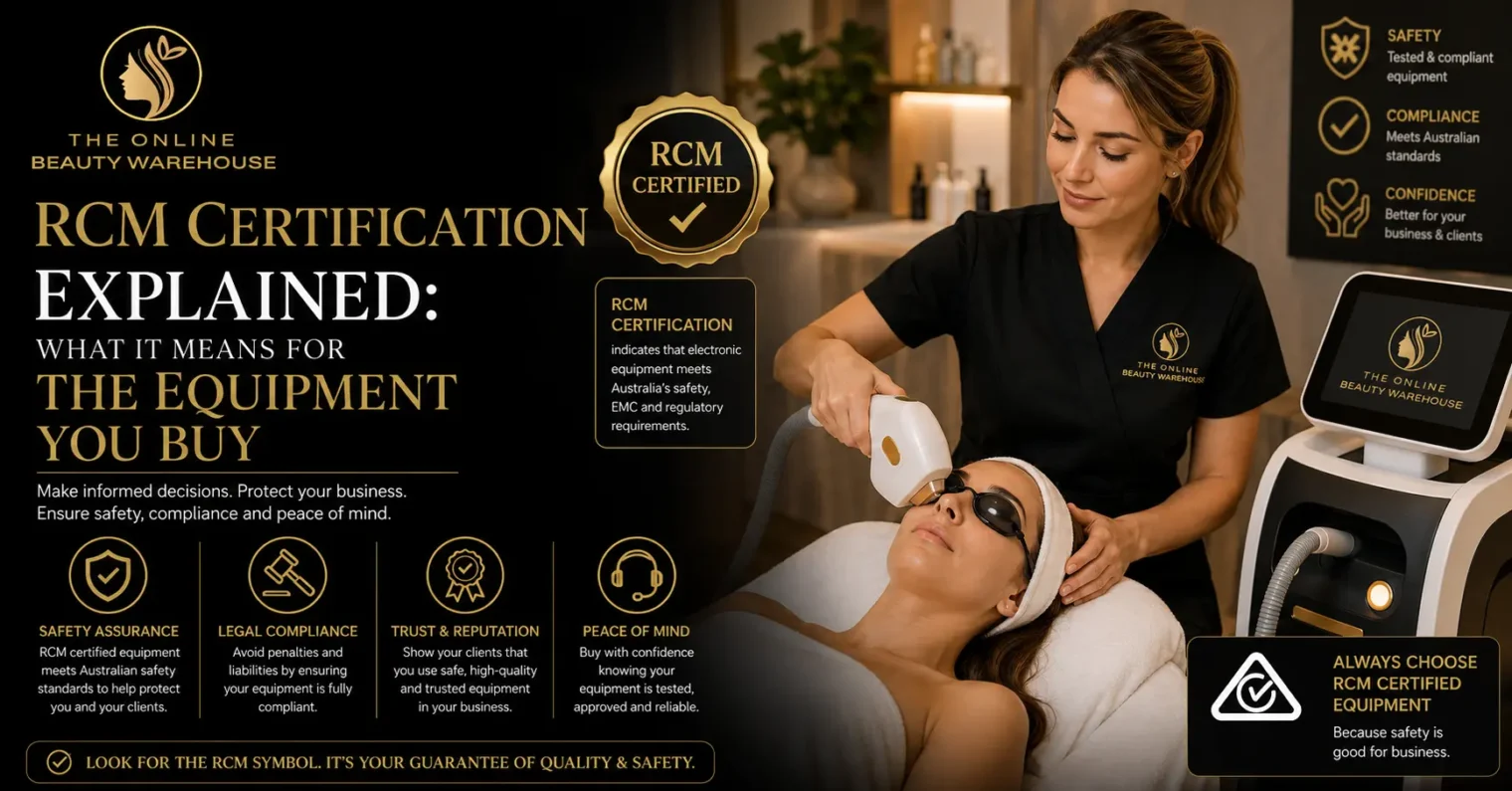
If you have spent even a short period of time searching for salon and spa equipment for sale, there is a high probability that you have come across a small Tick logo on the machine itself or its packaging. The RCM mark may seem familiar to almost every owner, but the exact meaning and importance of this certification might not be absolutely clear. Let’s try to change that.
What Is the RCM Mark, Actually?
The RCM symbol, which stands for Regulatory Compliance Mark, is a single logo introduced to signify electrical and electronic equipment compliance with relevant safety and electromagnetic compatibility regulations in Australia and New Zealand. Prior to 2013, there existed several marks used to indicate conformity assessment of electrical goods with Australian standards. RCM was introduced to replace multiple symbols with one standardised logo which could be recognised easily by both suppliers and consumers.
In essence, the RCM tick mark indicates that a particular electrical or electronic product conforms to the applicable Australian standards. This includes products such as the beauty equipment sold in Australia. The mark is a requirement for many products that are connected to the electricity grid and have been deemed in-scope by the competent authorities.
Why It Matters More Than a Sticker on the Box
It’s easy to glance past the RCM mark as just another logo. But for salon owners, it actually ties into three things that can have real financial and legal consequences.
Insurance
If a piece of equipment causes an incident, whether that’s an electrical fault, a fire, or an injury to a client, your insurer may ask whether the equipment met Australian compliance standards. Using uncertified equipment can complicate or even void a claim, leaving you personally exposed for the cost of damage or injury.
Safety
The whole point of the certification process is to catch equipment that hasn’t been properly tested for electrical safety. Machines without proper certification may not have been checked for issues like inadequate insulation, overheating risk or unsafe wiring, all of which are genuine hazards in a treatment setting where machines run for extended periods close to a client’s skin.
Resale value
If you are planning on selling or upgrading your equipment, buyers are requesting compliance more and more often before handing over cash for used machinery. Non-compliant equipment poses a challenge to sell and you run the risk of having to sell it at a discounted rate if you can’t get it up to standard.
How to Verify a Machine Is Genuinely Compliant
Unfortunately, the RCM mark itself can be printed on anything, including equipment that hasn’t actually gone through proper certification. It happens more often than owners realise, particularly with cheaper imported machines sold through online marketplaces. Here’s how to check before you commit to a purchase:
- Ask the supplier directly for the compliance certificate or registration details for the specific model you’re buying
- Check that the supplier is registered as a Responsible Supplier, which is a requirement for anyone legally selling in-scope electrical equipment in Australia
- Be cautious of machines priced well below market rate with no clear compliance documentation, since this is one of the most common red flags
- Where possible, buy from an Australian-based supplier who deals specifically in imported beauty equipment and can speak knowledgeably about compliance, rather than a generic overseas marketplace listing
- Keep a copy of compliance documentation on file for every major piece of equipment in your salon, both for your own records and for insurance purposes
If a supplier can’t answer basic questions about compliance or gets vague when you ask for documentation, treat that as a warning sign rather than a technicality to skip past.
What This Means When You’re Comparing Machines
It’s tempting to compare beauty equipment purely on price and features, but compliance status should be part of that comparison too. A cheaper machine that isn’t properly certified isn’t actually a saving once you factor in the risk to your insurance cover, your clients’ safety and your equipment’s future resale value. Treat RCM compliance as a non-negotiable line item, not an optional extra.
Buy With Confidence
If you’re not sure where to start, our compliance checklist walks through exactly what to check before buying any piece of salon equipment. You can also browse our range of RCM-certified machines, where every product is fully compliant and documented, so you can buy without second-guessing.
Still not sure whether a machine you’re considering is compliant, or want a second opinion before you buy? Book a consultation with our team at The Online Beauty Warehouse. We’re happy to talk you through the compliance side of any purchase, no pressure and no obligation.
Frequently Asked Questions
Is it illegal to use non-RCM certified equipment in my salon?
Selling non-compliant electrical equipment in Australia is against the law, and using it in a commercial setting carries real safety and insurance risk even where enforcement varies. It’s best treated as a hard requirement rather than a grey area.
How can I tell if the RCM mark on a machine is genuine?
Ask the supplier for the compliance certificate or registration details tied to that specific model. A genuine supplier will be able to provide this without hesitation. If they can’t, that’s a strong signal to look elsewhere.
Does RCM certification cover the machine’s performance, or just electrical safety?
RCM certification relates specifically to electrical safety and, where relevant, electromagnetic compatibility. It doesn’t assess treatment performance or clinical effectiveness, so it’s worth researching those aspects separately.
Are second-hand beauty machines still required to have RCM compliance?
Yes. Compliance relates to the equipment itself, not just the point of original sale. If you’re buying second-hand, it’s just as important to confirm the machine was compliant when new and hasn’t been modified in a way that affects its safety.
Can I get in trouble for using equipment I didn’t know was non-compliant?
As the business operator, responsibility for the equipment you use generally sits with you, regardless of what the original supplier disclosed. This is exactly why checking compliance documentation before purchase is so important.
Does every piece of salon equipment need the RCM mark?
Most electrical and electronic equipment sold in Australia falls under this requirement, but scope can vary by product type. If you’re ever unsure about a specific machine, it’s worth asking your supplier directly or checking with the relevant regulator.