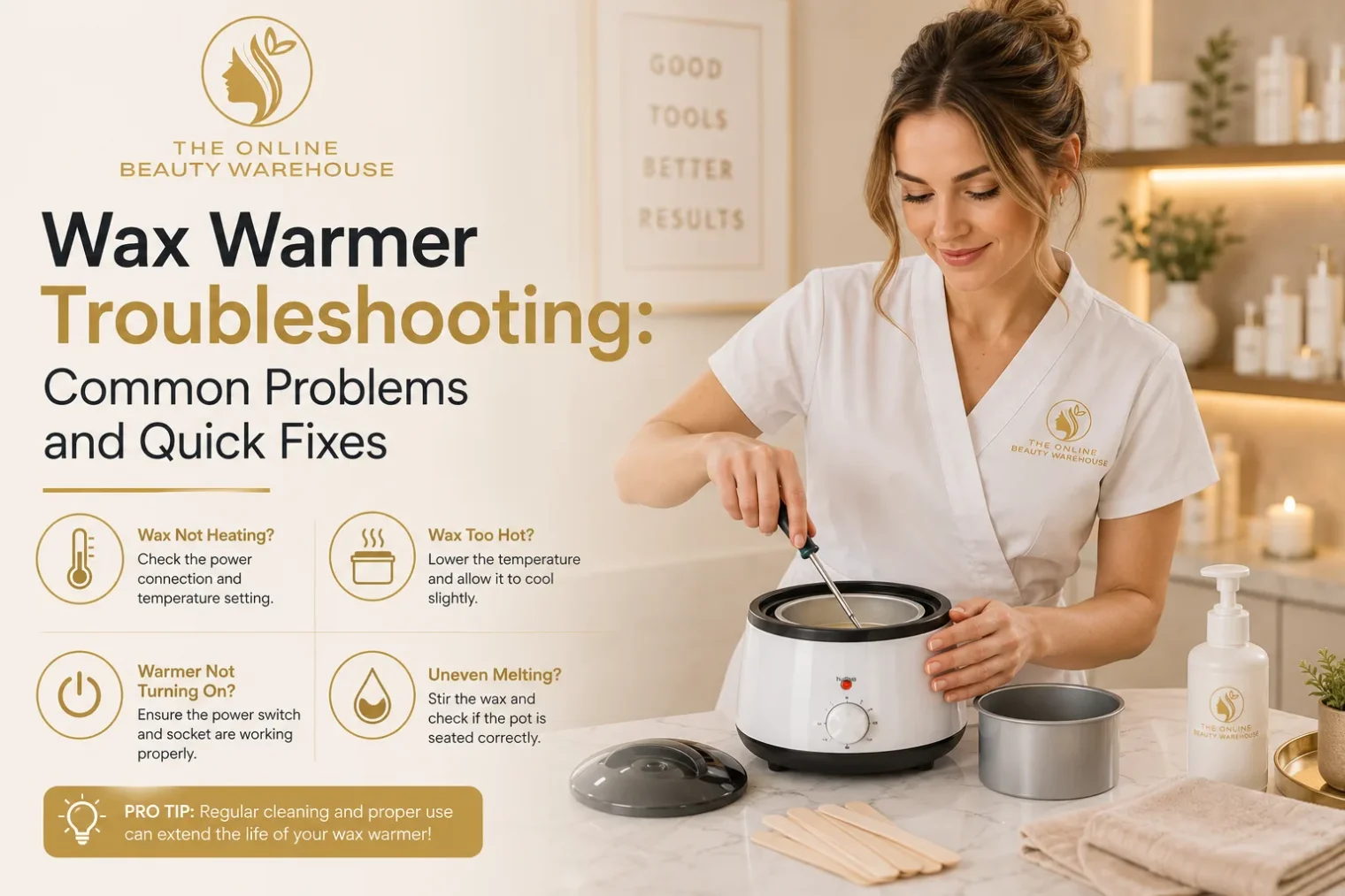
A wax warmer is one of those pieces of equipment that runs quietly in the background of a busy salon day, right up until it doesn’t. A dial that stops responding or a pot of wax that’s suddenly too thin or too thick can throw off an entire afternoon of bookings. The good news is that most wax warmer issues come down to a handful of common causes, and most of them are simple to fix or avoid altogether.
Here’s a practical rundown of the most frequent problems, what’s usually behind them, and when it’s worth calling in help rather than troubleshooting it yourself.
Wax Warmer Not Heating
This is the most common complaint, and it can range from a completely unresponsive machine to one that heats far more slowly than it used to.
- Check the power connection first, including the wall outlet itself. It sounds obvious, but a loose plug or a dead outlet is a surprisingly common cause
- Confirm the dial or digital control is actually set to a working temperature, since a dial that’s been accidentally knocked can leave the unit set to off or minimum
- Check for wax buildup around the heating element or base, since a thick layer of old, hardened wax can insulate the element and slow heating significantly
- If the unit heats a little but never reaches temperature, the thermostat may be starting to fail, which is generally a job for a technician rather than a DIY fix
Uneven Heating
Uneven heating usually shows up as wax that’s melted on one side of the pot but still solid on the other, or a texture that’s inconsistent from the top to the bottom of the pot.
- Give the wax a stir partway through heating, since many warmers heat from the base or sides rather than evenly throughout
- Avoid overfilling the pot, since too much wax can prevent heat from distributing properly, particularly in single-element warmers
- Check that the pot is sitting flat and fully seated in the warmer, as a pot that’s slightly off its base can heat unevenly
- If unevenness persists across multiple wax types and fill levels, the heating element itself may be wearing unevenly and worth having assessed
Wax Burning or Overheating
Burnt wax has a distinct smell and a noticeably darker colour, and it’s not just wasted product, it can also affect treatment quality and client comfort.
- Double check your temperature setting against the wax manufacturer’s recommended range, since different wax types have different ideal melting temperatures
- Avoid leaving wax on a high setting for extended periods once it’s already melted. Many warmers only need a lower maintenance setting to stay at working temperature
- If the wax burns even at a correct, moderate setting, the thermostat may be overshooting the set temperature, which is a sign the unit needs servicing
- Clean out old, repeatedly reheated wax regularly, since wax that’s been through many heat cycles burns more easily than fresh product
Temperature Dial Issues
A dial that feels loose, sticks in place, or doesn’t seem to change the temperature at all is one of the more frustrating faults, since it’s not always obvious whether the problem is the dial or something behind it.
- Check whether the dial turns freely through its full range, or whether it feels stuck at a particular point
- If the dial turns but the temperature doesn’t seem to change at all, the internal thermostat connection may have failed, which needs a technician
- Avoid forcing a stuck dial, since this can snap the internal mechanism and turn a repairable fault into a full replacement
- Digital control units that show error codes or flashing displays should be checked against the manufacturer’s manual before assuming a full fault, since some issues are simple resets
Motor or Rotation Faults (Roll-On and Rotary Warmers)
If you’re using a roll-on or rotary style warmer, a small motor drives movement within the unit, and this is a separate point of failure from the heating element itself.
- Unusual noises such as grinding or clicking are often an early warning sign, worth addressing before the motor fails completely
- Check for wax residue around moving parts, since built-up wax can jam a motor that’s otherwise working fine
- A motor that’s stopped completely, particularly if the unit still heats normally, generally points to an electrical or mechanical fault that needs professional repair rather than a clean and reset
DIY Fix or Call for Servicing?
As a general rule, cleaning, checking connections, adjusting settings and clearing wax buildup are all safe and reasonable to handle yourself. Anything involving the internal electrical components, the thermostat, wiring or the heating element itself should be left to a qualified technician.
- Safe to troubleshoot yourself: power connection, dial settings, wax buildup, overfilling, pot seating
- Best left to a technician: persistent temperature inaccuracy, thermostat faults, internal wiring issues, motor failure on rotary units
Opening up the unit yourself to inspect internal components isn’t recommended, both for safety reasons and because it can void any remaining warranty. If in doubt, it’s always worth checking with your supplier before attempting a repair.
Keep Your Wax Warmer Running Smoothly
Looking to replace or upgrade your wax warmer? Browse our wax warmer range, including our popular 2.75L paraffin wax warmer, built for reliable, consistent heating in a busy salon.
If your current warmer is showing signs of a deeper fault, book a consultation with our team and we’ll help you work out whether it’s worth repairing or replacing. Keep your treatments running smoothly with our wax consumables range, and if you’re stocking multiple salons, check our wholesale enquiry page for bulk pricing.
Frequently Asked Questions
Why does my wax warmer smell like burning even on a low setting?
This is often caused by old wax residue that’s been reheated multiple times, rather than the current setting being too high. Try cleaning out the pot fully and starting with fresh wax before assuming the unit itself is faulty.
How long should a wax warmer take to reach working temperature?
This varies by wax type and warmer size, but most units reach working temperature within twenty to thirty minutes from cold. If yours is taking significantly longer than usual, it’s worth checking for wax buildup around the heating element.
Can I use any type of wax in any wax warmer?
Not always. Different warmers are designed for specific wax types, such as hard wax, soft wax or paraffin, and using the wrong type can affect both heating performance and results. Check your warmer’s specifications before switching wax types.
Is it normal for a wax warmer to click or hum while heating?
A quiet hum is generally normal, but clicking, grinding or rattling noises are usually worth investigating, particularly on rotary or roll-on style units where a motor is involved.
How often should I clean my wax warmer?
Ideally, give the pot a thorough clean between wax types and remove any built-up residue at least weekly if the warmer is in daily use. Regular cleaning is one of the simplest ways to prevent uneven heating and burning.
What’s the average lifespan of a commercial wax warmer?
With regular cleaning and proper use, many commercial wax warmers last several years of daily salon use. Lifespan varies by build quality and how consistently the unit is maintained, so regular care genuinely extends how long it lasts.